 Friedman Rodman Frank & Estrada, P.A. Home
Truck Accidents
Reviewed by Ronald David Rodman, a Florida attorney who handles personal injury matters. Last updated July 29, 2026.
A Quick Reference Guide to Florida Truck Accident Claims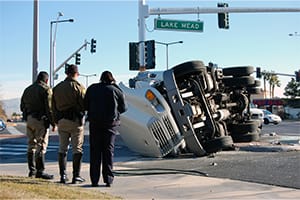 A commercial truck crash can be a negligence case under Florida law, but it is layered on top of federal safety regulations, and the defendant is usually a company rather than a driver. Florida Statute § 95.11(5)(a) gives most injured people two years from the date of the crash to file suit, and Florida Statute § 768.81(6) bars recovery entirely for anyone found more than 50 percent at fault.
- Governing standard: Ordinary negligence, which requires duty, breach, causation, and damages, as set out in Clay Electric Cooperative v. Johnson, 873 So. 2d 1182 (Fla. 2003).
- Filing deadline: Two years from the date of the crash for causes accruing on or after March 24, 2023, under Florida Statute § 95.11(5)(a).
- Fault rule: Modified comparative negligence under Florida Statute § 768.81(6). A person found more than 50 percent responsible recovers nothing.
- Multiple defendants: Joint and several liability is abolished. Under Florida Statute § 768.81(3), a jury assigns each party a percentage of liability, and each pays only its own share.
- Federal overlay: Interstate carriers and their drivers answer to the Federal Motor Carrier Safety Administration and its safety regulations, which govern driver qualifications, hours behind the wheel, and vehicle inspection.
- Fatal crashes: A death claim is brought by the personal representative of the estate under Florida Statute § 768.20, with recoverable damages defined by Florida Statute § 768.21.
- Where cases are filed: Most Miami-Dade truck cases are filed in the Eleventh Judicial Circuit, though carriers often move them to the United States District Court for the Southern District of Florida.
- Evidence that disappears: Engine control module data, driver logs, and dispatch records are subject to routine retention limits and can be gone within weeks.
The experienced truck accident attorneys at Friedman Rodman Frank & Estrada handle commercial vehicle claims from the firm's Miami office on West Flagler Street and across Miami-Dade, Broward, and Palm Beach Counties.
We have represented people hurt by commercial trucks since 1976, and the pattern almost never changes. Within hours of a serious crash, the carrier's insurer has an adjuster on the scene, and sometimes an accident reconstruction engineer. They are there to gather the evidence and to try to shape it. You are in an emergency room. That imbalance at the very start is the reason truck cases are worth treating differently from ordinary collisions, and it is why the first calls we make are about preserving records rather than filing paperwork. If you want the broader framework for how fault, insurance, and deadlines work in Florida injury cases, check out our South Florida personal injury practice.
Why Federal Rules Change How a Truck Case Is BuiltA truck case is built on a body of federal safety regulations that has no counterpart in an ordinary car crash. Interstate motor carriers operate under authority granted by the Federal Motor Carrier Safety Administration, and that authority comes with continuing duties. A carrier must qualify the people it puts behind the wheel and keep a file proving it. It must limit how long a driver stays on the road, and electronic logging devices now record that automatically. It must inspect, repair, and maintain its equipment, and document that it did.
Each of those duties generates a record. That is what makes trucking cases different in practice. A car crash usually comes down to two drivers describing the same intersection differently. A truck crash produces a paper and data trail that either shows a company meeting its obligations or shows it cutting corners, and that trail exists whether or not anyone was cited at the scene.
The crashes themselves cluster in recognizable ways across South Florida. Fatigue on long hauls down I-95 and the Turnpike. Improperly secured or overloaded cargo shifting in a turn. Tire failures on equipment that was overdue for inspection. Blind-spot collisions on the Palmetto Expressway where a trailer changes lanes into a car the driver never saw. Underride crashes, where a passenger vehicle slides beneath a trailer, which are catastrophic almost by definition. Each of these situations has a different proof standard, and each points at a different set of company records.
Which Companies Can Be Held Liable After a Florida Truck Crash?The driver is the obvious defendant and often the least important one financially. Behind the driver is the motor carrier, which may be responsible for the driver's conduct and for its own hiring, training, and supervision decisions. Then there is the company that owned the tractor or the trailer, if it is a different entity. Also, the company that loaded the cargo, in a shifting-load or overload case or the maintenance contractor that serviced the brakes.
Florida negligence law requires four elements: a duty of care owed to the injured person, a breach of that duty, a causal link between the breach and the harm, and actual damages. The Florida Supreme Court set out that framework in Clay Electric Cooperative v. Johnson, 873 So. 2d 1182 (Fla. 2003). In a trucking case each defendant is measured against its own duty, and the duties are not the same. A carrier's obligation to review a driver's qualifications before hiring is a different thing from a driver's obligation to keep a safe following distance, and a company can breach the first even where the driver did nothing careless behind the wheel.
How the shares get allocated surprises people. Florida abolished joint and several liability. Under Florida Statute § 768.81(3), the jury assigns a percentage of fault to each responsible party, and each defendant pays only its own percentage. The same statute allows a defendant to place fault on a person or company that is not even in the lawsuit, and that share may come off the top of the recovery.
Sorting out which entities belong on the verdict form decides how much of a verdict is actually collectible. A thinly insured carrier and a well-insured broker on the same verdict form produce very different outcomes for the same injuries.
What Damages Are Available After a Florida Truck Crash?Florida recognizes both economic and noneconomic damages in a truck accident case. Economic damages are the measurable losses: emergency and ongoing medical care, future treatment and surgery, rehabilitation, lost wages, reduced earning capacity, and out-of-pocket costs. Noneconomic damages cover pain and suffering, disability, disfigurement, mental anguish, and the loss of the ability to do things that made life worth living. There is no cap on either category in an ordinary Florida truck accident case.
Whatever the jury awards is then reduced by the injured person's own share of fault under Florida Statute § 768.81(6), and eliminated altogether if that share exceeds 50 percent. This is why carriers invest so heavily in fault arguments in serious-injury cases. Moving a plaintiff from 30 percent to 51 percent does not reduce their exposure. It ends it.
The mechanism is worth understanding, because it operates in two different ways at two different thresholds. Under Florida Statute § 768.81(6) the jury first fixes total damages, then assigns each party a percentage of responsibility, and the injured person's award is cut by their own percentage at any share up to and including 50 percent. So a plaintiff who is 40 percent responsible still collects 60 percent of the full figure. Above 50 percent the statute stops reducing and starts barring, and the recovery is nothing at all. The verdict form is where that gets decided, which is why who appears on it, and in what proportion, is contested well before trial.
When someone dies, the claim changes shape. A Florida wrongful death action is governed by Florida Statutes §§ 768.16 through 768.26. It is brought by the personal representative of the estate under Florida Statute § 768.20, on behalf of the estate and the surviving family members, and Florida Statute § 768.21 defines what each survivor may recover. Those categories are not the same as the ones available to an injured person who lives, and the difference is often substantial. We handle these alongside our other Florida wrongful death claims.
Punitive damages are a separate question with their own gatekeeping, and the gate comes before the pleading rather than after it. Florida Statute § 768.72 requires a plaintiff to make a reasonable showing of evidence and obtain the court's permission before a punitive claim may be pleaded at all, so the claim cannot simply be written into a complaint and argued later. Florida Statute § 768.73 then caps most punitive awards at the greater of three times compensatory damages or $500,000, which ties the ceiling to whatever the compensatory verdict turns out to be. In trucking, these claims usually rest on what a company knew and tolerated, such as a documented pattern of hours violations, rather than on a single bad decision by a driver.
What Happens After You File a Truck Accident Claim in Miami-Dade?The deadline is two years, and it is close to absolute. Florida Statute § 95.11(5)(a) gives most injury plaintiffs two years from the date of the crash to file suit, for causes accruing on or after March 24, 2023. That period was four years before the 2023 amendment, and the older figure still circulates widely. Missing the current deadline ends a claim regardless of how clear the carrier's fault is or how severe the injuries are.
Friedman Rodman Frank & Estrada has handled commercial vehicle claims in the Eleventh Judicial Circuit and the Southern District of Florida since 1976. Most Miami-Dade truck cases start in the Eleventh Judicial Circuit at the Miami-Dade County Circuit Court. Many do not stay there. A carrier headquartered outside Florida can often move the case to the United States District Court for the Southern District of Florida, which changes the discovery schedule and the procedural rules but leaves Florida law governing fault and damages. Either way, the case moves through pleadings, written discovery, document production from the carrier, depositions of the driver and the company's safety personnel, accident reconstruction, and mediation. Most cases resolve at or after mediation. The ones that do not are usually the ones where the parties genuinely disagree about apportionment rather than about what happened.
The Evidence a Florida Truck Case Turns OnTruck cases are won and lost on records that belong to the defendant and that have limited lifespans. The engine control module, often called the black box, stores speed, braking, throttle position, and sometimes hard-braking events in the seconds before impact, and that data can be overwritten once the tractor is returned to service. Electronic logging device records and the driver's hours of service show whether the driver was legally on the road. The driver qualification file shows what the carrier knew when it hired and kept that driver, including prior violations and medical certification. Maintenance and inspection records show whether known defects were repaired or deferred.
Beyond the carrier's own files, the case turns on the certified crash report, scene photographs, roadway measurements and gouge marks, dashcam and surveillance footage, cargo loading documentation, and the medical records tying each injury to the collision. Apportionment under Florida Statute § 768.81 runs through all of it, because every fact that explains the crash also assigns a share of the blame, and those shares are what the verdict form asks a jury to fill in.
Preservation is the part that cannot wait. Federal retention periods for many of these records are measured in months, and destroying a document on an ordinary retention schedule is not misconduct if nobody has asked for it to be kept. A written preservation demand, sent early, is what converts routine destruction into something a court will take seriously.
How We Build a Truck Case, and What You Should Do NowOur first move in a serious truck case is not filing suit. We send a preservation demand to the motor carrier and its insurer identifying the specific records we expect to be kept, and where the equipment is still accessible we arrange to inspect the tractor and trailer and download the module data before the truck goes back on the road. We pull the carrier's federal safety record and inspection history. Then we work outward from the driver to the companies that put that driver, that equipment, and that load on the road together.
There are things worth doing in the first days that do not require a lawyer.
Get the crash report number from the responding agency and request the certified copy.
Photograph the vehicles before they are repaired or sold for salvage, including the trailer markings and any company name or USDOT number visible on the door.
Write down the names of everyone who stopped, because independent witnesses to a truck crash rarely stay findable.
Keep every medical record and bill, and follow the treatment plan, since gaps in care become the insurer's argument that you recovered sooner than you did.
Do not give the carrier's insurer a recorded statement before you have advice, and do not sign a medical authorization that opens your entire history rather than the records connected to this crash.
Many truck crashes happen on the job, to delivery drivers, dock workers, and people driving for work. When that is what happened, there may be two separate claims running at once, a Florida workers' compensation claim against the employer's carrier and a negligence claim against the trucking company. They have different deadlines and pay different things.
Frequently Asked Questions About Florida Truck AccidentsCan a Trucking Company Be Held Liable if the Driver Was an Independent Contractor?
Often, yes. The label a carrier puts on a driver does not by itself decide the question. Florida courts look at how much control the company actually exercised over the work, and a motor carrier operating under its own federal authority carries obligations for the vehicles and drivers running under that authority. The analysis turns on the lease documents, the dispatch records, and who set the route and the schedule.
What Happens if the Truck Was Owned by an Out-of-State Carrier?
A crash that happens in Florida is generally governed by Florida law, and a carrier that sends trucks into the state can usually be sued here. Out-of-state carriers frequently remove cases to the United States District Court for the Southern District of Florida, which changes the schedule and the discovery rules but not the substantive law that decides fault and damages.
Can a Truck's Electronic Data Be Erased Before Anyone Reviews It?
Yes, and this is the single biggest reason to act quickly. Engine control module data can be overwritten when the truck returns to service, and carriers retain many driver and dispatch records for limited periods under federal rules. A written preservation demand sent early is what stops the routine destruction of records that would otherwise be lawful.
Does a Police Citation Decide Who Pays After a Truck Crash?
No. A traffic citation is evidence a jury may consider, but civil liability is decided under the negligence standard, and Florida Statute § 768.81(3) lets a jury apportion fault among everyone who contributed, including companies that were never cited. Carriers routinely argue that an uncited party, or the injured driver, carries part of the blame.
Are Punitive Damages Available in a Florida Truck Accident Case?
Sometimes, but not automatically. Florida Statute § 768.72 requires a plaintiff to make an evidentiary showing before a punitive damages claim can even be pleaded, and Florida Statute § 768.73 caps most punitive awards at the greater of three times compensatory damages or $500,000. These claims usually depend on proof about what the company knew, not just what the driver did.
- Miami car accident claims follow the same fault and deadline rules but run through Florida's no-fault insurance system first, which changes how the early months of a claim work.
- Motorcycle accident claims involve a rider who has no personal injury protection coverage to fall back on, so the case against the at-fault driver carries more weight from the start.
- Construction accident claims often involve the same commercial vehicles and the same overlap between a workers' compensation claim and a negligence claim against an outside company.
If you were hurt in a truck accident anywhere in Miami-Dade, Broward, Collier, Lee, or Palm Beach County, Friedman Rodman Frank & Estrada is here to help. But the sooner we start, the more of the carrier's evidence still exists. Friedman Rodman Frank & Estrada has handled South Florida truck and motor vehicle cases since 1976, we work on contingency, and there is no fee unless we recover for you. Call (877) 448-8585 or reach our South Florida injury team for a free consultation. We speak English, Spanish, and Creole.


 Your Privacy Choices