 Friedman Rodman Frank & Estrada, P.A. Home

Homestead Truck Accident Lawyers
Reviewed by Ronald David Rodman, a Florida truck accident attorney and Partner at Friedman Rodman Frank & Estrada, P.A. Last updated October 30, 2026.
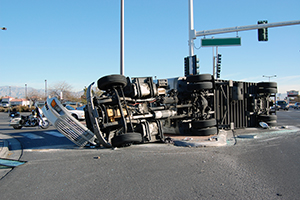 What You Need to Know About Homestead Truck Accident Claims
A truck crash in Homestead is decided under Florida negligence law in the courts of Miami-Dade County, with federal safety rules applied to most commercial trucks through Florida Statute § 316.302. A claim worth more than $50,000 belongs in the Circuit Court of the Eleventh Judicial Circuit under Florida Statute § 34.01(1)(c)3.
- Venue: A crash on Homestead roads accrues in Miami-Dade County, where Florida Statute § 47.011 permits suit against a Florida resident.
- Federal rules for most trucks: Florida Statute § 316.302(1) applies 49 C.F.R. parts 382 through 386 and 390 through 397 to commercial motor vehicles, whether they cross state lines or stay inside Florida.
- Smaller local trucks: A truck under 26,001 pounds that operates only inside Florida without placarded hazardous materials is exempt from that full set under § 316.302(2)(f), but must still follow the federal driving, equipment, and maintenance rules.
- Commercial vehicle defined: Florida Statute § 316.003(14) counts a vehicle used in commerce with a gross vehicle weight rating of 10,000 pounds or more.
- Owner liability: Florida's dangerous instrumentality doctrine makes a truck's owner vicariously liable for the driver it entrusted, and § 324.021(9)(c)1 denies commercial fleet owners the statutory caps available to lenders.
- Fault rule: A claimant found more than 50 percent at fault recovers nothing under Florida Statute § 768.81(6).
- Filing deadline: Two years from the crash under Florida Statute § 95.11(5)(a), for claims accruing after March 24, 2023.
Friedman Rodman Frank & Estrada's knowledgeable truck accident attorneys handle South Miami-Dade crash claims, including those from Florida City and the Redland, out of the firm's office on South Dixie Highway in Homestead.
Produce trucks and farm vehicles move between the fields and packing houses along Krome Avenue. U.S. 1 and Card Sound Road are the only two roads into the Florida Keys, so delivery and fuel trucks bound for the islands pass through Homestead and Florida City. The southern end of the Homestead Extension of Florida's Turnpike feeds that traffic onto local streets. Friedman Rodman Frank & Estrada has represented injured people across Miami-Dade and South Florida since 1976. Our Miami truck accident practice handles interstate carriers on I-95, and the same lawyers handle the box truck that ran a light on South Dixie Highway.
Which Federal and State Rules Apply to Trucks on Homestead Roads?Florida applies the Federal Motor Carrier Safety Regulations to commercial trucks on its roads through Florida Statute § 316.302. Subsection (1)(a) subjects owners and drivers of commercial motor vehicles in interstate commerce to 49 C.F.R. parts 382 through 386 and 390 through 397. Subsection (1)(b) applies the same parts to trucks operating only inside Florida, as those rules stood on December 31, 2023. Subsection (2)(f) then carves out a smaller truck. A commercial vehicle under 26,001 pounds, operated solely inside Florida and carrying no placarded hazardous materials, is exempt from subsection (1). It must still comply with part 382, part 392 on driving, part 393 on parts and equipment, and the federal inspection, repair, and maintenance duty in 49 C.F.R. § 396.3(a)(1).
In a Homestead crash, that exemption can be the first legal question. A local produce truck or nursery delivery truck may fall under it, and the driving and maintenance rules still reach it. A tractor-trailer hauling freight to the Keys from out of state does not, and the full federal regulations govern its driver's qualifications and hours. Subsections (2)(b) and (2)(c) set separate hours limits for intrastate drivers who are not exempt, including no driving after the 16th hour on duty.
Which Companies Answer for a Homestead Truck Crash?Florida's dangerous instrumentality doctrine is a common-law rule that makes the owner of a motor vehicle vicariously liable when someone it entrusted with the vehicle drives it negligently. The Florida Supreme Court described it in Christensen v. Bowen (2014) as imposing strict vicarious liability on those with an identifiable property ownership interest in the vehicle. In Emerson v. Lambert (2023), the Court recounted a 1920 decision holding a company liable for its employee's negligent driving of a company car even though the employee was on a purely personal matter. The Court also recounted that a person holding the vehicle through a rental or lease can be liable. Florida Statute § 324.021(9)(b) caps that liability for certain short-term lessors and individual lenders. Under § 324.021(9)(c)1, the caps do not apply to an owner whose vehicles are used for commercial activity in its ordinary course of business, other than a rental company.
A truck crash often has more than one responsible party. The driver, the company that owns the truck, a separate company that leased it, a shipper that overloaded it, and a repair shop that failed to fix the brakes can each share fault. Florida Statute § 768.81(3) abolishes joint and several liability, so a jury assigns each party its own percentage and each pays only that share. A worker who was on the job when a truck hit them may also have a third-party claim against the trucking company alongside workers' compensation.
How Do No-Fault and Damages Rules Apply to a Truck Crash?The injured person's own personal injury protection coverage pays first, under Florida Statute § 627.736, at 80 percent of reasonable medical expenses and 60 percent of lost income, if initial care is received within 14 days of the crash. Florida Statute § 627.737(2) then limits damages for pain, suffering, mental anguish, and inconvenience against the driver and owner to injuries that are significant and permanent, permanent within a reasonable degree of medical probability, significant and permanent scarring or disfigurement, or death. Economic losses beyond what that coverage pays, such as medical bills and lost wages it left uncovered, can be recovered without meeting the threshold. Florida's no-fault insurance rules apply to a truck crash the same way they apply to any car crash.
Where the injury meets one of those categories, the full tort claim against the driver and the truck's owner opens. Where the driver was impaired, punitive damages may also be pleaded under Florida Statute § 768.72. Florida Statute § 768.736 removes the usual punitive damages cap for a defendant whose normal faculties were impaired by alcohol or drugs, or whose blood or breath alcohol level was 0.08 or higher.
We advance the costs of investigating a truck crash, and we have recovered more than $220 million for injured clients, including a $1 million result in a trucking accident case. Our Homestead personal injury office sits on South Dixie Highway, the stretch of U.S. 1 that runs through town.
Which Miami-Dade Court Hears a Homestead Truck Case?A Homestead truck accident lawsuit is ordinarily filed in Miami-Dade County, under Florida Statute § 47.011, which allows suit against a Florida resident in the county where the claim accrued. The same section does not govern suits against people who are not Florida residents, so an out-of-state owner raises a separate venue question. County court jurisdiction is capped at $50,000 under Florida Statute § 34.01(1)(c)3, so a serious truck case goes to the Circuit Court of the Eleventh Judicial Circuit. The nearest courthouse to Homestead is the South Dade Justice Center at 10710 SW 211th Street, where the Clerk handles county court, small claims, and traffic matters, including any citation issued after the crash.
The deadline to sue is two years from the crash under Florida Statute § 95.11(5)(a), for claims accruing after March 24, 2023. A claim that accrued on or before that date keeps the older four-year period.
Commercial vehicles are a steady part of Miami-Dade's crash numbers. The Florida Department of Highway Safety and Motor Vehicles recorded 8,546 crashes involving commercial motor vehicles in Miami-Dade County in 2024, with 18 commercial vehicle fatalities and 1,364 injuries, in its Traffic Crash Facts Annual Report. The report's commercial category is broader than the statute's and includes any vehicle the officer marked as commercial.
Which Records Prove a Homestead Truck Accident Claim?The trucking company's own records are the core of the case, and federal rules require many of them to exist. Driver qualification files show whether the driver was licensed and medically certified for the vehicle. Maintenance and inspection records under 49 C.F.R. § 396.3(a)(1) show whether brakes, tires, and lights were kept in working order, a duty that applies even to a small local truck exempt from the hours rules. Hours records apply to a non-exempt driver and show whether the driver was past a legal limit. Bills of lading and load records show what the truck was carrying and how heavily, which bears on stopping distance and on whether a shipper shares fault.
Electronic data fills in the crash itself. An engine control module can record speed, braking, and throttle in the seconds before impact. Dashcam and telematics systems on fleet trucks often capture the road ahead. Along U.S. 1 and Krome Avenue, gas stations and packing houses may have cameras pointed at the road.
The crash report helps find the evidence but cannot carry the case at trial. Florida Statute § 316.066(4) bars using a driver's statements made for the report as evidence in a civil trial. The report still lists witnesses, the truck's owner, and each insurer, and those names lead to proof that is usable.
How We Handle a Homestead Truck Claim, and What You Can Do NowWe send preservation demands to the trucking company early, before engine data and camera footage are overwritten and before the truck is repaired. We identify every business with a stake in the truck, including the owner, any lessee, and the company whose load it was carrying. Then we work out which federal rules applied to that particular vehicle, since a local truck under the § 316.302(2)(f) exemption and an interstate tractor-trailer carry different records.
We also look closely at coverage. A commercial owner gets no statutory cap under § 324.021(9)(c)1, and the trucking company's policy is often the largest source of recovery. Friedman Rodman Frank & Estrada handles Homestead truck crash claims on contingency, and we speak with clients in English, Spanish, and Creole.
If you are able, photograph the truck before it leaves, including the company name and USDOT number on the cab door, the license plates on the truck and trailer, and any damage. Get the driver's name and the name of the company the driver works for, which may be different from the name painted on the truck.
See a doctor within 14 days so your personal injury protection benefits apply. Write down the businesses near the crash on South Dixie Highway, Krome Avenue, or the Turnpike ramps, and ask them in writing to keep their video. Request the crash report once it is filed. Do not give a recorded statement to the trucking company's insurer before you understand how it will be used.
Questions About Homestead Truck AccidentsDo Federal Trucking Rules Apply to a Local Farm or Produce Truck?Partly, depending on its weight and where it travels. Florida Statute § 316.302(2)(f) exempts a commercial truck under 26,001 pounds that operates only inside Florida and carries no placarded hazardous materials from the full set of federal rules. That truck must still follow the federal rules on driving, on parts and equipment, and on inspection, repair, and maintenance.
Can the Company Be Liable if Its Driver Was Running a Personal Errand?Often, yes, as the owner of the truck. Florida's dangerous instrumentality doctrine makes the owner of a vehicle vicariously liable for its negligent operation by someone it entrusted with it. The Florida Supreme Court recounted in Emerson v. Lambert (2023) that a company was held liable for an employee's negligent driving of a company car even though the employee was on a purely personal matter.
Is There a Cap on What a Truck's Owner Must Pay?Not for most commercial fleets. Florida Statute § 324.021(9)(b) caps the liability of certain short-term lessors and people who lend a vehicle. Under § 324.021(9)(c)1, those caps do not apply to an owner of vehicles used for commercial activity in its ordinary course of business, other than a rental company.
Who Pays My Medical Bills Right After a Truck Hits My Car?Your own personal injury protection coverage pays first, regardless of fault, under Florida Statute § 627.736. It covers 80 percent of reasonable medical expenses up to the policy limit, but only if you receive initial care within 14 days of the crash. Costs above that coverage are pursued against the driver and the truck's owner.
Related Practice Areas- Homestead car accident claims follow the same no-fault and threshold rules without the federal trucking regulations and the company defendant.
- Homestead wrongful death claims follow a fatal truck crash, with each survivor's damages defined separately from the estate's own claim.
- Uninsured and underinsured motorist coverage can add a layer when the truck's insurance falls short of the damages.
A trucking company's engine data and camera footage can be overwritten, so the sooner a preservation demand goes out after a Homestead crash, the more of the record survives. Call (877) 448-8585 or reach our Homestead truck accident attorneys for a free consultation. Friedman Rodman Frank & Estrada handles these cases on contingency and charges no fee unless we recover.


 Your Privacy Choices